Brands have treated social media as top of the funnel channel for years. It was targeted as a platform to build awareness, spark curiosity and nurture intent as time passed. Expectation toward these platforms revolved around educating customers first, and the selling criteria for businesses was secondary. Through the shift of time this approach changed, reflecting how platforms and algorithms operate today.
The drastic shift of the platform’s environment to a decision driven approach, removed friction and promoted users towards immediate action taking. It’s the result of the change towards structural, behavioural and economic changes across the digital framework.
If your social media strategy stands only around engagement or intent-building tool, you are missing out as the game has drastically changed. This blog will talk about why this change happened, and how to approach it strategically.
1. Platforms Are Monetization-First, Not Discovery-First.
Social media is no longer a platform for building connection. Each platform has transformed into a revenue driven ecosystems designed through their algorithms to monetize attention as efficiently as possible.
Platforms like Instagram, Facebook, LinkedIn has embedded tools like lead forms, paid placements or advertising verticals which are highly conversion focussed formats. These are not optional add-ons; but are core features. The platform intent is clear to convert users into customers from scroll to sale without diverting them to any other platform.
This brought a major shift in the social media marketing enclosure. Platforms realized that keeping the users in their ecosystem will enhance lead generation. This improved content quality from simple visual content to triggering content, promoting action taking. This on the longer run promoted user retention and spend on advertisements. As a result content started playing a crucial role in favoring organic reach aligning with the commercial outcomes.
If your content does not signal business intent, platforms are less motivated to distribute it widely.
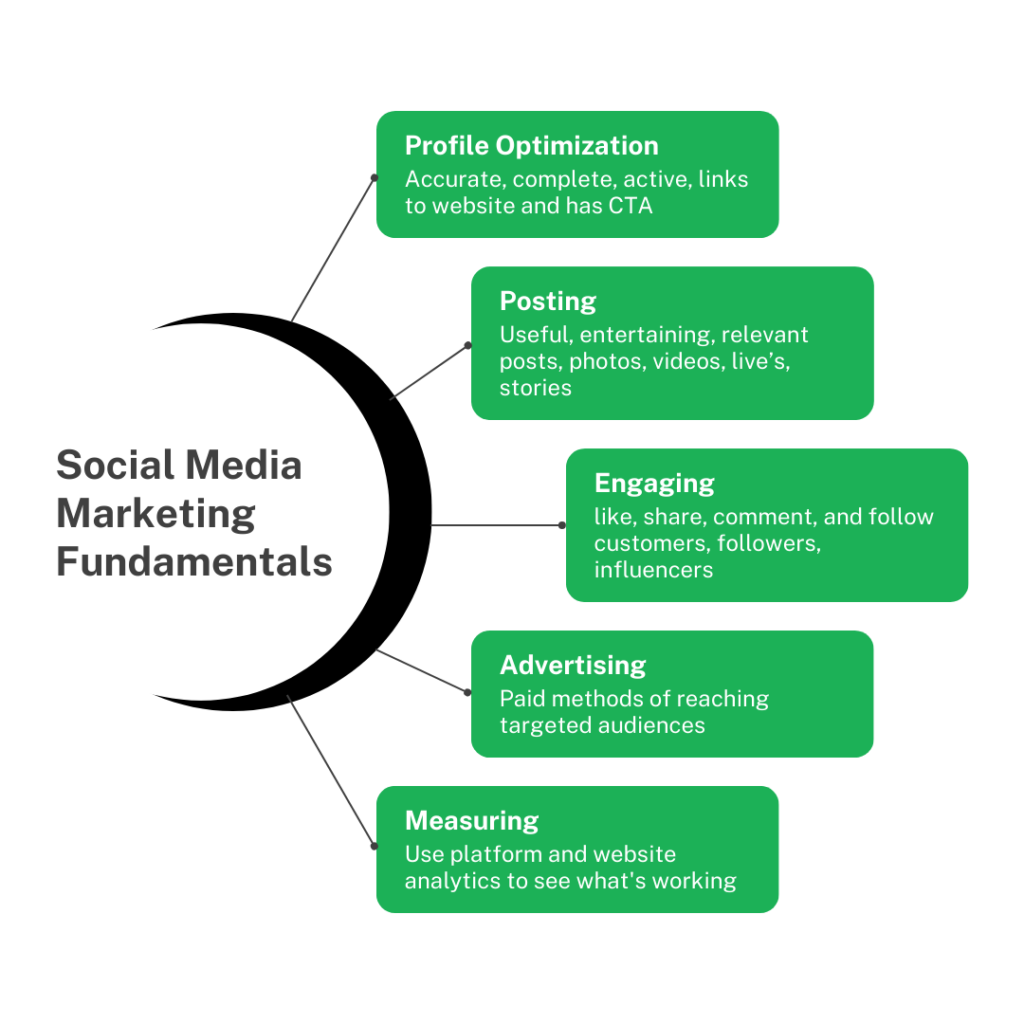
What are the 5 steps in social media marketing? –
2. Audience Behaviour Has Shifted From Research to Readiness.
The audience on these social platforms no longer comes for just for browsing, they come for awareness, clear points and have shorter patience for vague messaging.
Social platforms have flipped into full functioning search engines, evaluating options, checking credibility and making decisions in real time for brands and businesses. The shift is directly related to social media intent, decreasing the difference between discovery and purchase.
Content development around direct addressing that resonates with their problem, providing a solution, the users expect an immediate next step. If there is a delay in this step, the customers move on to another business.
This is not impatience , it is efficiency.
3. Content Saturation On Social Media Forces Commercial Clarity.
The amount of content posting online daily, has made passive and generalized content less effective. Educational posts without positioning, blends into the noise.
To place your content on the differentiation scale, it must be crystal clear. Audiences doesn’t require more tips, they need a context driven by an action plan. This is where social media sales emerged as a dominant outcome. Clear offers, direct messaging and exceptional positioning cut through content clutter more effectively that common content types.
When a lot of posted content types are advice, the creator who confidently presents a solution-oriented action plans, wins attention of its audience, promoting conversions.
This does not mean abandoning value. It means anchoring value to outcomes.
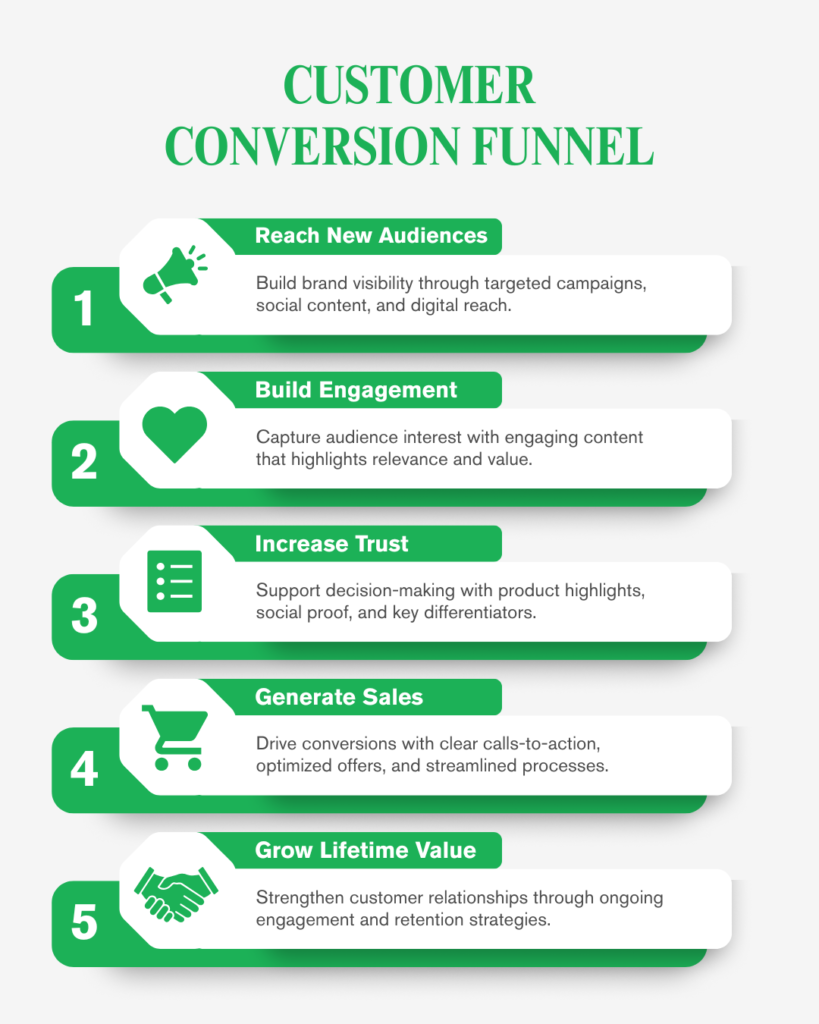
Step By Step Customer Conversion Funnel –
4. Small Businesses Need Faster ROI Cycles.
Big brands, building their content strategy on the advertising intent promotes long term sustainability for their audience. For smaller cycle, it is not beneficial. Continuous content posting and staying in the loop helps improve ROI for businesses drastically.
Social media for small businesses evolved out of necessity. Limited budgets, rising ad costs and competition in the market pushed brands to demand measurable returns from every channel. Social media is a highly controlled environment in terms of direct communication, instant feedback through ratings and rapid iteration.
This promoted content strategy to move from brand presence to revenue generation model. Posts are now expected to generate leads and keep business in the marketing loop of conversations and sales, not just limited to likes.
If your content cannot justify its existence in business terms, it becomes expendable.
5. Frictionless Selling Is Now Built Into the Experience.
A very significant approach, governed by the platforms is to sell directly to the audience visiting. Integrated shops, direct messages, automations, payment links and checkout features have changed the old methods of conversation and sale.
This is exactly the reason why selling on social media feels less intrusive than it once did. Social media platforms normalized this. Users expectation rose when inquiry, negotiation, and purchasing was streamlined all in one place, having less friction.
When a buyer’s experience is rich, embedded into the content experience itself, intent naturally converts into action. At this point, social media is no longer a tool for communication but a platform to initiate transactions.
Ignoring this reality puts you at a strategic disadvantage.
Conclusion –
A strong strategy starts with aligning business goals to platform Behaviour. You define who you are speaking to, what problem you solve, and what action you want your users to initiate. Content is then built around education, positioning, and conversion, highly supportive of analytics, in refining performance over time. Strategy is not about posting more; it is about posting with purpose.
Thanks for making it till here….